Showing posts with label Eastern Montana. Show all posts

Monday, May 7, 2012

Glendive woes -- too many jobs available, or rather, too few workers

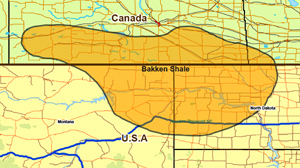
Would that this were a problem every town in Montana had, but it is increasingly the story in much of Eastern Montana. The closer one gets to the epicenter of oil production activity in the Bakken, the more intense the problems get. As we furthermore noted in our last post on the Bakken, on the Montana side of the border we all too often get the problems without the benefits.

Case in point is an article published in the Glendive Ranger-Review in an item entitled "Area sees record number of job listings." (May 3, 2012 issue, third item down.) A few highlights:

-- 200 job listings at Job Service, compared to a historical average of 100-120.
-- Basically nobody to apply for most of those jobs.
-- A severe housing shortage in Glendive means that housing prices have been driven up beyond what can be supported by many of the non-oilfield jobs that are available, leading Job Service to tell prospective employees to not to come to Glendive looking for work until they have an interview (and by implication, have non-existent housing lined up.)
-- "At a recent Dawson County Economic Development Council meeting, executive director Amy Deines said she has received phone calls from major retailers and others asking about the availability of labor." In other words, businesses want to come to town, but can't.
-- Even though there is a housing shortage, there are no job postings for construction workers (this feels like a big red flag, but what exactly does it mean?)
-- Some employers are considering following the lead of WalMart in Williston, ND and hiring foreign workers on H-2B visas (although there is no mention in the article of where these foreign workers would live.)

Read the entire article to get a taste of what things are like on the ground in Eastern Montana. Not only is Montana not exploiting the economic opportunities available, we are losing ground because of a lack of housing. Note that Minot, ND's homeless population is rising in spite of housing being constructed at "an unprecedented rate." North Dakota's government has taken an active role in encouraging housing development, knowing how crucial this part of a state's infrastructure is. Isn't it interesting, parenthetically, that so many of those who go on and on about how the government needs to spend vast sums on "infrastructure" are the same ones who object to modest tax breaks that would encourage the building of privately owned infrastructure -- infrastructure that, once built, the government has no fiscal responsibility for maintaining?

In the article linked to in the last paragraph, the North Dakota oil boom is described as "a blessing and a curse." Both are certainly true. What is even more true is that it is unavoidable (nor does the article claim that it is,) which means that the fate of a state facing a boom is, to a great extent, in its own hands.

At the risk of being thought sacrilegious, one recalls the verse from the Bible: "I have set before you life and death, blessing and cursing: therefore choose life..." While the words in that context have a rather more sublime intent in mind, they do point to an ancient and universal human truth -- much of how we experience life will be determined by the choices we make when facing decision points.

We wouldn't go so far as to say that Montana has actually chosen the "curse" side of the ledger -- all too often, we seem simply to have failed to make decisions at all, engaging in magical thinking that it will all work out. It will, in a sense, indeed work out -- the "invisible hand" as a general principle isn't going away anytime soon. In an only partially free economy like ours, however, that "invisible hand" tends to be rather more active on the side of the state-line where it is more welcome. For now, that isn't our side.

One suspects that there are some good Montana jokes circulating in western North Dakota -- we'll have to inquire..

Tuesday, April 24, 2012

Montana oil boom problems -- sticking our head in the shale

The AP's Matt Brown has a piece that covers an issue that anyone who spends time in eastern Montana already knows about: there is a dark side to the Bakken oil boom. The specific problems that Brown addresses are criminal, but housing shortages, labor shortages for essential services, and rising costs of living also are well-known items on the list.
In MH's opinion, many of these problems are unavoidable -- when there is any kind of wide-open "rush," there will be camp followers who bring their problems with them, and there will be growth pains. From our observations, Montana has tended to avert its eyes from the Bakken, hoping that it will just sort of take care of itself. If we don't encourage it, we may miss out on the big bucks, but we'll also miss out on the big problems, right?
Well, not really. The oil is going to get drilled on the ND side of the border because that state has a plan to exploit the boom to the fullest. The business and the government revenue will stick disproportionately to the ND side of the border, while the problems will not recognize the existence of a border, and will spill over according to natural forces of supply and demand.
So we thus begin to see the price of Montana's failure to rise to the challenge of making the most of our share of the Bakken: instead of paying attention to our laws -- tax, unemployment insurance, worker's comp, regulatory -- to encourage businesses to base out of Montana, our inattention has led to a failure to maximize the economic impact of oil development. As a result, Montana doesn't have the funding to deal with the problems that we were always going to face, no matter what.
We will get our share of crime and man-camps and beat-up roads, but not our share of the permanent economic development.
Consider: Glendive is in the heart of Montana oil-producing country. It also marks the half-way point between Billings and Minot, ND. Let's say that you are in some sort of oil-field support business and are looking for a place out of which to base your burgeoning oil-related corporation. You know that ND has a more favorable business climate, so you headquarter in Minot.
But what if ND did not have a more favorable business climate? What if things were the same in Billings and Minot? Which would you choose -- the one with ski-slopes and fly-fishing streams ready to hand, the one with a well-established and diverse base of restaurants and shopping, the one with a warm micro-climate that keeps you in a winter banana-belt? Or would you choose the frozen north where Souris River flooding is what passes for summer entertainment, between mosquito dodging and other outdoor sports?
This is, we hasten to say, hyperbole! The serious point is that there are many structural attractions to basing a corporation out of Billings when compared to basing it out of someplace in North Dakota. Why Montana's leaders aren't out trying to figure out how to make this sale is a mystery. We are going to get the problems. Why are we not trying to get the economic growth? It may be too late, and Montana may be falling prey to something that once upon a time was the sole possession of North Dakota vis a vis non-agricultural economic growth -- helplessness, pessimism, and despair.
It doesn't have to be that way. Given a choice, would we at MH -- old fashioned agrarians that we are -- choose to not have any of this oil stuff at all? On our more curmudgeonly "leave us alone -- we liked things the way they were" days, well, absolutely. But conservatives are, if anything, realists. The Bakken isn't going away. A state without the capacity to change is without the means of its conservation, to paraphrase Russell Kirk, as oft is our wont.

Wednesday, April 2, 2008

The governor -- feeling the heat, putting out fires at the Hardin Prison

Forget the over-confident talk from the sinister side of the political spectrum.

This governor's race is going to be very competitive and close. The governor's actions show that he is feeling the heat from a Roy Brown campaign that continues to build momentum in spite of the fact that it is the governor who has the big bucks.

Most recently, the governor was down in Hardin trying to bluster his way through the morass of the Hardin detention center. It is as clear as the summer sun that at the very least, the governor has been treating that situation with neglect. It just doesn't deserve the kind of attention that important things get. Like, say, a fundraiser at the Kentucky Derby or jetting to California to do the Daily Show. After all, it's just Eastern Montana.

Yet, he's complaining that he is being blamed for something he didn't do. Well, actually, in a sense that's right. He hasn't done anything. He hasn't, until now, even deigned to talk to the community of Hardin about their concerns, even when they made a much publicized trip to Helena to get his attention.

A glaring omission in the Gazette article is that the governor doesn't appear to have been asked "why not?"

The good people of Hardin have been trying to get a response from him or a meeting with him, and it has never happened. Why not?

What it took to get his attention was apparently having an angry Hardinite leave a banner up at the Capitol after a recent demonstration that said "We've been Schweitzerized. Was it as good for you governor as it was for us?"

Ed Kemmick rightly describes the governor's reaction as "thin-skinned." (He also correctly deducts style points from the sign-writer for not knowing where to use commas.) If the guv is truly surprised that the folks down in Bighorn County would be unhappy with him, then one wonders if he is really the highly skilled pol that he is made out to be. Let alone whether he has the right temperament for the job.

Of course, the important skill is in the ability to convey, via the media, a sense of righteous indignation. And there, too, things seemed to fall just a bit flat on the governor's visit to Hardin. Because there are just so many obvious questions that a single visit isn't going to fix.

The governor's statements basically amount to saying "I really wish this would all go away, and since I want it to all go away, that should show I care."

This isn't over by a long shot. Perhaps the real reason that the governor was down in Hardin (besides being personally miffed about the banner) is that the Republican Party down there is in a resurgence. They've got a newly revamped and energetic organization, and the community as a whole is really disinclined right now to be cutting slack to Democrats -- especially in the governor's race and AG race. The resentment at being cut out of the state prison business in favor of the for-profit prison in Shelby whose corporate executives have cut all of those checks to the governor's campaign -- well, it's not showing signs of going away.

This past weekend, Bighorn County Republicans had an unheard-of gathering of well over 100 people for their annual Lincoln-Reagan Day Dinner. All of the statewide candidates were there, and energy levels were high, by all reports. Most people would be surprised to know that 100 active Republicans in Bighorn County even exist, so this is a sign of a fire having been lit down there.

And it is a fire that a quick visit and some glib talk and indignant posturing isn't going to put out any time soon. Maybe the governor will get serious about helping Hardin solve the problem that he and his Democratic friend, Attorney General McGrath helped create. Maybe it will happen even though he hasn't shown any signs of being interested in solving it prior to this election year.

A fix of some sort would be good for Hardin, and we'll be happy for them if it comes about. A healthy economy for Hardin is more important than scoring political points. But we'll still be asking why it took the pressures of an election year for the governor to focus on it, even though this train has been bearing down on Bighorn County for his entire term of office, headlight glaring and whistle blowing.

The fact that this meeting in Hardin happened at all is a testimony to the inroads that Roy Brown is making in the governor's race.

Friday, November 16, 2007

The Hardin prison -- still not out of the woods

We mentioned back in April that we were glad that the new Hardin detention facility was going to be open for business, helping the local economy in that part of the state -- a part of the state that needs a boost.

We noted at the time that rumors had been making the rounds about politics playing a role in jeopardizing the financial viability of the facility -- but that we were glad it seemed to be turning out OK in spite of it all.

Apparently we spoke too soon, since the facility is now trying to get permission to house out-of-state inmates ("post-conviction felons on a short-term basis of no more than two years") in order to make ends meet. Charles Johnson, in his piece, alludes to the political change of course that put the Hardin facility in unexpectedly dire straits:

Tom McKerlick of the Two Rivers Authority, Hardin's economic development arm that owns the facility, said officials believed the project had the support of former state Corrections Director Bill Slaughter. But he said it lacks the support of Director Mike Ferriter, who took over the state agency in July 2006.

In addition, U.S. Marshal Dwight MacKay of Montana had told them the U.S. Marshals Service was interested in space at the Hardin facility, but, as it turned out, the private prison in Shelby got the contract.

"Quite honestly, we were told by the Marshals Service and the state, you build it and we will come," (Hardin city attorney Rebecca)Convery said.

She said jail has lined up some short-term contracts from out of state, but the Corrections Department won't allow them.


Yes, that's right -- a private prison (owned by Corrections Corporation of America) in Shelby ended up getting the U.S. Marshals contract over a city-owned prison in Hardin, even though the latter had apparently been led to believe that it would get the contract. I guess this is the sort of thing one needs to get in writing from the feds.

And the supply of state prisoners directed Hardin's way apparently hasn't met the expectations that were raised when the facility was planned. This is part of the reason why the state GOP noted that Corrections Corporation of America executives are donors to a certain statewide campaign.

To the extent that any of this is connected, well, to the victors go the spoils, as the saying goes. Too bad the people of Hardin got caught in the middle of this one, but that's politics. The legislature can help that city in the coming session by clearly allowing the facility to go forward with its plan to house some out-of-state inmates.

One hopes that legislators of both parties, especially from Billings and eastern MT, can come to some agreement on this. Prisons aren't exactly most people's idea of the ideal growth industry for a state, but the facilities are needed, this one is built, and the state needs to help it be successful.

Monday, May 21, 2007

McNutt: "Enough was Enough"

Continuing with the theme touched on in yesterday's Sunday Roundup and Branding, the Sidney Herald reports the comments of Rep. Walt McNutt, R-Sidney, about the recent special session of the Montana legislature:

...McNutt points out there's no tax relief for businesses, industries and even farms if the home is in the corporation's name.

McNutt put it simply: "We didn't get any business equipment tax relief," and "property tax relief wasn't in the budget from the get-go."

But just as Rep. John Ward was quoted in Chuck Johnson's article that "it was time to be done," McNutt had a similar comment:

...in the final two days of the special session it was obvious that the governor's budget was going to be passed in some form. (McNutt) said he voted for the final budget because he didn't feel any more progress could be achieved.

"There was no use sitting there any longer. Nothing was getting done. It was a situation where enough was enough," McNutt said.

Now over at Left in the West where he can really spread his blackbird wings, former 4&20 blogger Jay Stevens takes note of the Montana Headlines comment on Sunday that there was "a case to be made (whether one agrees with it or not) for just giving the executive what it wanted and being done with the session, since it was clear that real compromise wasn't going to happen."

Stevens however takes an interesting turn:

The unspoken corollary to this comment was that there was another case to be made by GOPers: one for obstructing the Governor at every step, and using a one-vote majority in one body of the legislature to bring down the session even though it wouldn't do any good.

By such logic, U.S. Senate Democrats from 2000 to 2006 had two choices: rubberstamp President Bush's entire agenda, or filibuster the entire government into shutdown. The fact that different strategies were devised indicates that perhaps other alternatives were available.

Even if one were to accept the idea that in any political situation there are only two choices (an idea that is mentioned only to be condemned,) one wonders how such a "corollary" would be arrived at, other than by intentionally creating a caricatured Republican strawman to swat about.

The far more obvious alternative case to be made was for Democrats and Republicans to arrive at a modest but real compromise on spending and taxes in the special session. It is hard to tell whether Montanans should be intrigued by the idea that perhaps progressive thinking isn't capable of arriving unaided at the concept of compromise -- or unsettled because Democratic partisan discipline won't allow it, even in an essentially tied legislature.

Thursday, April 26, 2007

Looking ahead -- neither discouragement nor stubbornness, please

There really is little further to say about what happened up in Helena with Rep. Lange. GeeGuy over at Electric City nailed it by combining a no-nonsense "this was stupid of Lange" with a cold-eyed appraisal of some of the "cluck cluck clucking" going on by Democrats and by the press.

The episode does provide an all-too-vivid illustration of why Montana Headlines has, throughout the session, been talking (at the risk of sounding like a nag) about the need for the Montana Republican party to rediscover the apparently lost art of rhetorical discipline. Leaving aside things that should be highly valued -- like good manners and intelligent discourse -- it demonstrates that Republicans are always going to come up on the short end of things when we don't pay attention to little details like not letting someone get you to lose your temper in public.

We would add, parenthetically, that there are elements of Hellenic tragedy in this, one of the final scenes in the last act of the play. Specifically, we observe a lesson in the concept of hubris, since some Republicans have made a point of criticizing the governor for his reported temper. We had heard a couple of predictions that the governor would lose it at some point during the session. While he has certainly had his little moments, barring something completely unexpected, the final and most memorable outburst will unfortunately be chalked up in the "R" column.

Because of the bad press coming at a most politically inopportune time, a temptation for Republicans is going to be discouragement, but that would only compound any problems caused by Majority Leader Mike Lange's now-famous hortatory oration. Lange did the right thing by apologizing to the governor, and now it's time for Republicans to get back to negotiating the best deal possible. Attempts will be made to capitalize on this by making it seem like a larger-than-life occurrence -- with the goal of cowing Republicans into compromises they otherwise would never make.

Another misstep would hurt even more, so whoever does the negotiating needs to be under extremely good self-control. Republicans can expect that there will be subtle attempts to draw them out into more intemperate language. It's just part of politics -- there's nothing personal about it. Anticipate it and mentally prepare for it.

On the other end of the spectrum of possible Republican responses is stubbornness. Negotiation involves give and take, bargaining chips, and shifting positions. Again, there's nothing evil or personal about any of this. It's just how things are done.

If a line in the sand is going to be drawn, whoever is drawing it had better be very certain that it is a line that the entire Republican caucus is going to back up no matter what disaster comes down the pike. Otherwise, don't draw that line -- it is very demoralizing to watch the other guy step across once your ability to hold that line disappears.

When mistakes are made, there are costs. We suspect that the costs don't need to be terribly high for this mistake if the GOP handles things well from this point on. We expect that getting schooled like this will result in lessons learned and that things will now be handled with a little more attention to detail.

Republicans should continue to be grateful to Lange for all of the hard work he has put into this session. His position hasn't been an easy or eviable one, given that it was a pre-determined fact of life that Republicans would lose a lot more battles than they would win. We hope that he dusts himself off and goes back to the work of finishing out the session -- and he has our support as he does that.

Finally, thanks to our friend Jay over at 4&20 Blackbirds for his concern -- both head and keyboard are on the road to recovery.

Monday, April 16, 2007

Dropped calls

The Sidney Herald carries Rep. Walter McNutt's response to Gov. Schweitzer's veto of HB 469, which will result in a doubling of the tax rate that cell phone companies pay in commercial property taxes. McNutt had sponsored the bill, knowing that his constituents and other rural Montanans would be the primary victims of the veto.

The governor justified the veto by saying that the bill changes law, rather than clarifying it. This is a case where the governor could actually, we imagine, have used an amendatory veto in a way that wouldn't be unconstitutional, as Jeff Mangan very credibly argues the governor's use of such an amendatory veto was on the county bridge bill.

On that note, Montana Headlines has expressed a strong opinion on the need to preserve the prescriptive aspects of Montana's stream access tradition. And yet, the population growth and shifts of Montana mean that some landowners are hit much harder than others, and much harder than any Montana landowners in the past were hit when Montana's access tradition was developing.

The old rules in their exact forms may not fit current realities, and thus there is a need for affected landowners and Montana's sportsmen to come to legislative compromises -- perhaps in the form of allowing landowners to apply to the state for limitations in access based on traffic and wear-and-tear. Or there could be usage fees for certain access point, or the affected landowners could receive some compensation. Creative thinking needs to happen for us to stay on the same page.

We don't allow unlimited numbers of float trips on the Smith River, we don't allow motorized traffic in wilderness areas, and there are any number of other limitations that keep public traffic within limits on certain public lands -- why couldn't there be such limitations at certain bridge access points? And why does there have to be gates for boat access at every bridge? Fishermen can climb the fence and wade to their heart's content. We understand the need to pander for votes, but short-circuiting the legislative process by this amendatory veto is another example of disregard for rural Montana's opinions and needs -- constitutional or not.

Going back to the "promote cell phone service in Eastern Montana bill," rather than vetoing it, the governor could have sent it back with an amendment that said something to the effect of "whether this bill is a clarification or a changing of previous law, the intent of the legislature is to continue the current working definitions of how mobile services are to be taxed." There are enough lawyers in the Democratic part that someone could probably be found to write it properly in a way that wouldn't leave the door open for lawsuits by fixed-line telecommunications companies.

Of course, that would put the brakes on what could be the start of a spate of reclassifications that will result in higher rates while having plausible deniability about whether taxes were raised. And we wouldn't want to do anything to prevent us from squeezing more money out of taxpayers during our current budget shortfall, would we?

It is perhaps not the end of the world if eastern Montana never gets decent cell phone service -- most of us prefer to be doing something besides chatting on the phone while driving through God's country. And the rest of us are patient enough that we can just keep redialing every few minutes when we do need to have a conversation.

As Rep. McNutt said in the Herald interview:

"The sad fact is we don't have enough rural votes to change the veto," McNutt said. "I have to pick up some urban votes."

Haves and have-nots -- as GeeGuy pointed out over at Electric City recently, "the world does not revolve around Missoula, or Bozeman, or Kalispell," but those towns have already had their mobile phone services developed by companies using those lower tax rates. And now when the rest of Montana might start to get some better service, let's "close the loophole." We've got ours.

One of the comments to that post stated that the burgeoning populations of Montana's favored cities are "the ones with the "enlightened" viewpoint about Havre, Miles City, Butte and Great Falls..." Obviously "Big-Sky Husker" has met some of the same folks we have. It's amazing how much Democrats in Montana's cities know these days about what is good for rural Montana, and how often those opinions differ from those of legislators actually democratically elected by rural Montanans.

McNutt shouldn't have much trouble putting together his veto over-ride if he can get the idea across to the Democratic legislators of Great Falls and Butte that while their constituents are handy for providing Democratic legislative majorities, they are beginning to have more in common with the Republicans of Miles City and Malta than they do with the smart set in Montana's hotspots.

Thursday, April 12, 2007

Coalbed methane -- plan B

We have expressed concern about coalbed methane development because of its potential negative impact on farming and ranching.

Specifically, the salinization of the Tongue and Powder Rivers through dumping highly saline water from deep coal seams could permanently damage irrigated farmland along those rivers. One doesn't have to have spent a lot of time in eastern Montana to know that well-watered farmland is a scarce and precious commodity in those parts.

In an exciting development, a CBM drilling company has come up with a plan to take water from the deep (roughly 1000 ft) coal seams where the methane is being extracted, and to reinject that water into a shallower coal seam (about 300 feet) that has the capacity to absorb the water.

This is the best of both worlds, since it not only prevents salinzation of rivers and soil, it also puts this water at a level where it can be reached with conventional well-drilling and used for things like watering livestock.

Permit applications are being submitted, and if things are as billed, it will be a win-win for everyone.

Sunday, March 4, 2007

Economic patriotism for Montana -- part II

Ed Kemmick put simultaneous responses on Mark Tokarski's website as well as on Montana Headlines, pointing out that our two sites had addressed the same Billings Gazette article on Gov. Schweitzer's and Corey Stapleton's comments about our tax and business climate.

Kemmick correctly pointed out that our views of these remarks were "180 degrees" apart, and expressed an interest in hearing our comments on the other's posts.

One can read Tokarski's post by clicking on the above link, and the Montana Headlines post with Tokarski's response in the comments section is just below, or here.

We were not capable of being as concise as was Tokarski, so are replying as a separate post here.

First, Mr. Tokarski mixes up two things that are intertwined but separate: indicators of economic prosperity (such as incomes and unemployment rates) and state government revenues.

What is at issue in this current legislative session is state government revenues, so that is what should be concentrated on.

There is no question, for instance, that energy prices and demand account for some of our current high tax revenues. But this is a separate issue from our economy. Are we to assume that a booming energy production industry is the reason that unemployment rates are low in Whitefish as well as in Sidney? Or that incomes have risen in places west of the Bighorn River?

Second, Tokarski, using a common Democratic argument, implies that the only reasons for Montana’s cyclical revenue collections are things like energy or commodity prices. It is true that commodity prices have a cyclical impact on our economy, but it cannot be avoided that what grossly magnifies the effects of these economic cycles on Montana’s tax revenues is our dependence on an income tax – something over which we do have control.

States without income taxes do not go through the kinds of cyclical crises that Montana does. The bottom line is that incomes (and hence income tax revenues) vary with broader economic cycles, but citizens own property and spend money at far more constant rates.

There are good reasons to avoid a sales tax (for instance, Billings draws a lot of income out of Wyoming because Montana doesn't have one) -- but if we insist on avoiding one, we'd better stay used to wide fluctuations in tax revenues.

As has been stated on Montana Headlines before, more is accomplished (including scoring political points) when there aren’t arguments over who gets credit for what. The main point to our previous post was not to claim sole Republican credit for favorable economic conditions or high tax revenues. It was rather to question whether the governor was attempting to use appeals to “helpfulness” as a way to silence Republicans who believe that lowering tax burdens yet more will help the state’s economy even more.

And as has also been stated on Montana Headlines before, Republican policies at the very least did not hurt the economy or hurt tax revenues. Republicans certainly can’t prove that it was only their policies, and not factors like energy prices and demand, that were responsible for Montana’s current favorable economic and revenue situation. But then, we’ve never heard them claim that they were.

Neither, though, can Democrats prove that Republican policies did absolutely nothing to help our economy or revenues, but yet we certainly hear Democrats making that assertion.

There is one point on which we would agree – namely that a good use of excess tax revenue is to plan ahead for days when revenues will be lean.

Democrats could propose that ongoing state spending rise only with inflation, and that no new employees or programs would be added. They could furthermore propose saving most excess revenues for a rainy day. With such a combination, a future Montana on the cyclical economic downswing wouldn't have to struggle to fund them.

While Republicans wouldn't share their economic pessimism, we would still probably find consensus on that plan. As long as Democrats continue to propose massive increases in government spending, however, we will assume that they aren't as worried about a future bust as they say they are.

Thursday, March 1, 2007

Eastern Montana -- random political notes

Oil Money grab, redux: A couple of weeks ago, Montana Headlines brought an article in the Sidney Herald to our readers' attention, in which we learned that a retired Univ. of Montana environmental studies professor -- Rep. Ron Erickson, D-Missoula, was attempting to lay his environmentally clean hands on dirty oil money in order to spend it in his own backyard (well, he proposed that the revenues be distributed according to population, which amounts to the same thing.)

In a follow-up article, we learn that the bill was tabled in committee, which means that it would now take 51 votes on the floor to "blast it out of committee," and that isn't at all likely to happen. Looks like Eastern Montana dodged a bullet there.

"A slap in the face of Eastern Montana": Speaking of dodging bullets, we yesterday briefly mentioned the attempt by Sen. Wanzenried, D-Missoula, to set up a deal whereby the state would buy Plum Creek land around Missoula -- and then sell off public land in Eastern Montana in exchange.

We watched these proceedings with interest on television, and the best line from Sen. Dan McGee, R-Laurel, in his spirited (and successful) opposition is the one given in the title of this segment (and quoted in the Gazette.) The Gazette continues with McGee's comments:

"Well, I guess if we want to make a park of everything west of the Continental Divide, this is the way to do it," McGee said.

He criticized the bill for targeting the land of one company "at the expense of the people east of the Continental Divide."

We note that Lane Larson, D-Billings, crossed party lines to vote with the good guys on this one, and that our loyal Eastern Montana guy -- Sam Kitzenberg -- voted with his new masters in Missoula and Helena instead of with his fellow Eastern Montanans.

Sen. Jon Tester tries to wow the provincials by phone: The Miles City Star reports on the conference call that our newly-minted Sen. Jon Tester had with Eastern Montana journalists a few days ago.

Tester is quoted as saying "We need affordable health care. That could suck all my energy." The story goes on to say that Tester is on the Senate Energy committee and so will assign a staffer to brief him periodically on health issues. With a straight journalistic face, the Star reports that Tester said he would "focus his attention on energy issues."

We're confused... wasn't health care going to suck all his energy? Or does he need to focus on energy because he won't have any energy left over? We are going to have to read John Halbert's pieces for the Star more closely in the future -- one wonders if Tester's staffers will pick up the apparently tongue-in-cheek treatment that the paper in one of our favorite towns gave him.

Tester waxes 9/11 as he answers questions about the St. Mary's Diversion project, saying that "it's not if but when a disaster strikes," and talking about what will happen "if it blows up." (Are terrorists targeting the project?) But he has a solution -- "start moving dirt."

And the direst warning of all is that it's not just a northern Montana thing: "if this project fails, it will affect the economy of the whole of Montana, and it will impact the whole Northwest." Tester forgot to add "the nation, the world, and beyond..."

It certainly isn't just something that would affect just a few people in the Milk River area, and it could be that a problem with the St. Mary's diversion would shake Seattle and Portland to the core, but we doubt it.

And for the pièce de résistance, there's this beauty about global warming: "We want to make sure the polar ice caps don't melt and Glacier Park doesn't have to change its name."

As we've said before, we sure did trade up when we elected Jon Tester.

And to think, he's the more intelligent and articulate of our two Senators.