Over at Big Sky Cairn, we posted on the governor's recent alleged breaking of campaign laws by doing public service announcements after he had officially filed for re-election. See also Western Word for more background on the imbroglio.
It is a valid and seemingly well-substantiated charge on the part of the Republicans, and as we have pointed out before, this sort of thing is absolutely necessary in order to keep the other party honest. But as we also pointed out in that post (dealing with the governor's fundraising trip to Kentucky Derby,) the GOP doesn't do itself any favors when it overdoes the rhetoric. Follow the preceding link for our full diatribe, but the heart of the critique was this:
It's just fine to file a complaint against the Dems when they appear to have broken a campaign law. In fact, it's necessary.
But at the same time, we should treat it like taking out a stinking bag of trash -- it's gotta be done, there's no pleasure in it, and we would prefer that the trash wasn't stinking in the first place.
The Montana GOP, rather than treat this like a big deal... should just matter-of-factly file a complaint when the Dems get caught...
...if the Dems want to claim to be the party of the squeaky clean, we'll hold them to it.
So the Montana Headlines reaction was less than enthusiastic upon reading things like this in the GOP press release:
...violating a key campaign finance law -- Well, maybe. Will Montanans agree that this is a "key" law that is a linchpin of democracy, or will they see it as a good law that makes sense (does any Montanan want public officials to use their positions to get what amounts to free campaign ads?) We think the latter.
...he's going to pay dearly for his illegal activity... -- Well, maybe. But as the Dems proved in their having to pony up money in FEC fines for violations in the Tester campaign, they tend to look at the paying of fines for breaking political practice laws as part of the cost of doing business. They probably have a line-item for it in the governor's campaign budget. With as much money as the governor has in his war-chest, he'd hardly feel the impact of the fines, even if they were in the tens of thousands of dollars.
And in addition, we don't yet know that he is even going to have to pay, so it shouldn't be stated with such certainty that "he's going to pay dearly." Stating that someone is guilty before they've even been officially charged by authorities, let alone convicted, is a practice that we would think Republicans would rather leave to Democrats.
After all, it was the governor himself (demonstrating the fact that he either doesn't understand the principle of "innocent until proven guilty," or doesn't care) who boasted during the Tester campaign that Sen. Conrad Burns was definitely going to jail and that Burns and Abramoff were going to share a cell with bunk-beds.
The fact that Governor Schweitzer signed this measure into law, and then turned around and broke that very same law, is the sort of arrogant, heavy-handed tactics Montanans have come to expect from him.
-- Maybe. It would be in character, if the stories are to be believed. But it might also just be a careless mistake, as we noted in our Big Sky Cairn post.
There is a difference between intentionally arrogant actions in which one knowingly flouts the law and the kind of passive arrogance that is shown by not bothering to think about the fact that there might be rules to be followed. Montanans will understand the difference, and if it is clear that the governor was just being careless, then overstating the case isn't going to help the overall GOP message about the governor and the unsuitability of his style of governance. Some people might just think he's being picked on, and feel sorry for him.
There are more examples in the GOP complaint itself of what seems to be overstated language (keeping in mind that in a formal complaint, specific language sometimes has to be used to match the language in the law being appealed to,) but regular MH readers will get the idea.
Measured rhetoric is generally more effective than overwrought rhetoric. Republicans do better when we act like responsible adults and methodically expose Democratic misdeeds using carefully chosen, even understated, words that we don't later have to retract or revise. There is room for humorous hyperbole in a blog-post or a stump-speech, but press releases and formal complaints should be, if anything, understated, when making charges against Democrats.
The governor probably did wrong on this one. The Commissioner of Political Practices has made the initial statement that this should have been filed as an ethics complaint, and thus not made public, but the details will be examined and we'll find out the facts.
Based on the Gazette article, there seems to be a definite problem -- since on the one hand a spokesman for the governor claims that "no state funds were used," and yet the Agriculture Department official says he spent 10-12 hours preparing the ad, then used a government e-mail account to send it out to radio stations. That sounds like state funds were used -- so why say they weren't? And the ads were played free of charge as public service announcements -- precisely the kind of thing the law intended to prohibit. So why try to claim that they somehow weren't covered by the law? As Electric City pointed out, the thing to watch is how the governor responds.
And on that score, our chief executive gets an obvious failing score. The failure to own up to the truth on this is potentially much more serious than the transgression itself.
But the making of these ads, while probably against the law, doesn't rise to the level of an Abscam scandal -- it's rather just one more relatively small and tedious example of why we need someone with a serious and professional attitude as our new governor. Like, say, Roy Brown. And that, we believe, is something that the people of Montana are going to be able to understand quite well by the time this campaign is over.
Showing posts with label Bob Brown. Show all posts
Showing posts with label Bob Brown. Show all posts
Wednesday, April 9, 2008


Thursday, April 3, 2008
Unbreakable -- Congressman Rehberg 's re-election bid
Missoulapolis and Western Word have already commented on the excellent article in the Missoula Independent on U.S. Congressman Denny Rehberg.
The article contains plenty of negative comments from Democrats about Rehberg, but they pale by comparison to the positive portrayal of Rehberg that can't help but come through. And those negative comments generally have a ring of desperation, such as this one from California trial lawyer (and now cowboy-hat-wearing Montana Dem chairman) Dennis McDonald:
"He’s been nothing but a lap dog for president Bush since day one."
The trouble is that the left has been trying the "lapdog for Bush" mantra for quite some time and it isn't sticking -- in no small part because it isn't true. As Montana Headlines has pointed out in previous posts, an at-large Congressman from a small state like Montana is wise to vote with his party caucus a good amount of the time -- otherwise Rehberg's legislation wouldn't have the support of the GOP caucus that it needs in order to pass.
But Rehberg doesn't have a particularly high ranking of party-line voting for someone who is a Republican from a conservative-leaning state. According to the Washington Post's system, he has a lifetime rating of 92.3%. This might seem high, until one realizes that this puts him as 266th out of 442 members on the Washington Post's list of party-line voters. How often does the average Democratic Congressman vote with the Democratic Party? Answer: 92.3% of the time -- does this perhaps mean that Dennis McDonald believes that his party is made up of lapdogs?
Anyone who has been watching Rehberg grow into the role of Montana's titular Republican Party leader can't help but be impressed with how he is handling the role. The Independent piece does a good job of conveying how sure on his feet Rehberg is, and how at ease he is in almost any setting in Montana. It also portrays accurately just how hard-working Rehberg is, with a tireless schedule of traveling the state, listening to constituents and keeping his finger on the pulse of places as diverse as Butte and Broadus.
Is Rehberg wealthy? Sure, he is. Given that the Democratic Party is the party of the über-wealthy, it is hard to imagine why the Dems would want to try to make an issue out of that, but it seems that they do. Of course, their guy Jim Hunt (as we pointed out before) is so poor that he was able to dash off a 5 figure check just to make sure Justice Jim Nelson kept his job looking out for trial lawyers' interests on the Montana Supreme Court in his last election.
But the best quotation of the article on this score comes from Bob Brown:
Jim Hunt will have a tough time making the case that Rehberg has lost touch, adds Bob Brown.
“Rehberg is far more in touch with Montana and Montana values than Jim,” Brown says. “Jim’s certainly a competent guy, but Denny has the enormous advantage of having traveled this whole state and having been a student of the political process both in Washington, D.C., and in Montana.
A fellow who has spent most of his life as an attorney in Helena is more in touch than Dennis Rehberg?”
The writer, Rob Harper, adds this comment of his own after having watched Rehberg in action:
The better question might be: Is anyone better at staying in touch than Dennis Rehberg?
Answer: Right now? No.
When it comes to staying in touch with every corner of Montana, there is no-one else in Rehberg's league. Like the professional that he is, he will concentrate on his job, and as a politician he will concentrate on one election at a time. But in this year of the Sen. Baucus cash juggernaut, it is hard not to look a bit into the distance at 2012, realizing that Rehberg will likely face off against Sen. Tester with 6 straight winning statewide elections under his belt and having spent more than 2 decades building his statewide support and organization.
The article contains plenty of negative comments from Democrats about Rehberg, but they pale by comparison to the positive portrayal of Rehberg that can't help but come through. And those negative comments generally have a ring of desperation, such as this one from California trial lawyer (and now cowboy-hat-wearing Montana Dem chairman) Dennis McDonald:
"He’s been nothing but a lap dog for president Bush since day one."
The trouble is that the left has been trying the "lapdog for Bush" mantra for quite some time and it isn't sticking -- in no small part because it isn't true. As Montana Headlines has pointed out in previous posts, an at-large Congressman from a small state like Montana is wise to vote with his party caucus a good amount of the time -- otherwise Rehberg's legislation wouldn't have the support of the GOP caucus that it needs in order to pass.
But Rehberg doesn't have a particularly high ranking of party-line voting for someone who is a Republican from a conservative-leaning state. According to the Washington Post's system, he has a lifetime rating of 92.3%. This might seem high, until one realizes that this puts him as 266th out of 442 members on the Washington Post's list of party-line voters. How often does the average Democratic Congressman vote with the Democratic Party? Answer: 92.3% of the time -- does this perhaps mean that Dennis McDonald believes that his party is made up of lapdogs?
Anyone who has been watching Rehberg grow into the role of Montana's titular Republican Party leader can't help but be impressed with how he is handling the role. The Independent piece does a good job of conveying how sure on his feet Rehberg is, and how at ease he is in almost any setting in Montana. It also portrays accurately just how hard-working Rehberg is, with a tireless schedule of traveling the state, listening to constituents and keeping his finger on the pulse of places as diverse as Butte and Broadus.
Is Rehberg wealthy? Sure, he is. Given that the Democratic Party is the party of the über-wealthy, it is hard to imagine why the Dems would want to try to make an issue out of that, but it seems that they do. Of course, their guy Jim Hunt (as we pointed out before) is so poor that he was able to dash off a 5 figure check just to make sure Justice Jim Nelson kept his job looking out for trial lawyers' interests on the Montana Supreme Court in his last election.
But the best quotation of the article on this score comes from Bob Brown:
Jim Hunt will have a tough time making the case that Rehberg has lost touch, adds Bob Brown.
“Rehberg is far more in touch with Montana and Montana values than Jim,” Brown says. “Jim’s certainly a competent guy, but Denny has the enormous advantage of having traveled this whole state and having been a student of the political process both in Washington, D.C., and in Montana.
A fellow who has spent most of his life as an attorney in Helena is more in touch than Dennis Rehberg?”
The writer, Rob Harper, adds this comment of his own after having watched Rehberg in action:
The better question might be: Is anyone better at staying in touch than Dennis Rehberg?
Answer: Right now? No.
When it comes to staying in touch with every corner of Montana, there is no-one else in Rehberg's league. Like the professional that he is, he will concentrate on his job, and as a politician he will concentrate on one election at a time. But in this year of the Sen. Baucus cash juggernaut, it is hard not to look a bit into the distance at 2012, realizing that Rehberg will likely face off against Sen. Tester with 6 straight winning statewide elections under his belt and having spent more than 2 decades building his statewide support and organization.
Friday, November 23, 2007
Notes on the governor's fundraising letter
We've already had Ed Kemmick handicap the quality of the quotations in the Gazette article about the governor's campaign sending a certain fundraising letter to people who had contributed reportable amounts to Republican candidates for governor in 2004.
And we've had LITW label the GOP reaction as "hysterical," sort of missing the point that Roy Brown, for instance, was reporting on the reaction he was getting from Republican faithful, rather than saying anything negative himself about it.
As Bob Brown (one of the former candidates whose donors were hit up) pointed out, there is nothing illegal whatsoever about the letter. Nor is there anything unethical about it. Fundraising data is public information, and the governor's campaign simply used that public information.
What was unusual about the letter wasn't having Democrats hit up Republicans for money -- we get on Dem fundraising direct-mail lists all the time. What was odd was having a sitting governor send a letter to those who funded his opponents, telling them in the first sentence that his campaign had taken note not only of whom they had contributed to, but exact amounts.
It is one thing to be put on a mailing list, and quite another to have something of that specificity coming from a governor. Again, there was nothing illegal or unethical about the letter, which was written in a nice, friendly sort of way. It was just unusual.
The reactions that we heard from those who received the letter were absolutely as negative as Roy Brown said he was getting from people he has met on the campaign trail since then. But the letter was a sort of Rorschach test.
Those who claimed to have personal knowledge of the governor's strong-arming ways saw the letter as vaguely menacing -- "I know where you live, I know you gave to my opponent, and how much."
We'd be interested to know if anyone else has seen this tactic before: a large-scale letter sent by a candidate in one party to supporters of the opposition, reminding them that what they give is public information.
Anyway, those who had contributed to Pat Davison's campaign felt they were being reminded that they had contributed money to a convicted felon.
Those who have a visceral dislike for John Bohlinger saw the prominent featuring of Bohlinger's name and the emphasis on the "bipartisan ticket" as yet one more example of cynical game-playing on Bohlinger's part, messing with the party he claims to belong to even as he works to defeat its candidates up and down the ticket.
And so forth.
Most expressed a determination to respond by sending a check to Roy Brown.
Surprisingly few mentioned the letter's citation of the goofy Gazette online poll that showed the governor with a 75% to 25% "lead" over Roy Brown, which was a bit concerning, since it perhaps shows a lack of knowledge about the complete unscientific nature of online polling of this kind.
Anyone who believes that the governor is going to carry a majority in the coverage area of the Gazette -- let alone win it by a 3 to 1 margin -- is of course welcome to do so, or to believe any other sort of foolishness.
What is also interesting is that the Gazette itself, which is quick to point out that its own online polling "unscientific" (put differently, "for entertainment purposes only") didn't mention this aspect of the letter, and point out that on-line polling has no scientific validity.
Will the letter be successful? To a certain extent, it can hardly not be successful. A few people may send a check the governor's way (although that could hardly have been the main point,) and some may feel a bit unnerved and decide not to give to Roy Brown, having been reminded that someone in Helena is watching. If you are someone who believes those stories about political opponents getting tax audits and what-not, then you might decide to put your money elsewhere -- or maybe just leave it in the bank.
But for every dollar "gained" by one of those two ways, ticked-off Republicans will probably give several more to Brown's campaign, wiping out any real advantage. So money couldn't be the main point.
The main value of the letter was rather, surely, to test the Brown campaign -- to see if it will be reactive rather than pro-active. If Brown's history of campaigning is any indication, he will stick to his campaign strategy and for the most part ignore this sort of stunt.
The governor's campaign was out for a reaction -- preferably an over-reaction that it can point to either as a sign of unreasonableness or of weakness (depending on the audience to whom the over-reaction is being pointed out.)
As LITW pointed out, "independents are watching."
Republicans in general would do well to remember that attacking the governor -- especially in a reactive way -- has never worked. Name one thing it has ever accomplished. One.
He's just too good at that sort of jujitsu.
Yes, the campaign for governor will have to involve Republicans answering -- calmly -- the Democratic charges against Brown, and pointing out -- matter-of-factly -- what the current administration has done wrong and what it has failed to do right.
But to the extent that the race turns into Republicans being drawn into a three-ring circus, it is only to our disadvantage. When someone is clowning around, usually ignoring the act is the best way to get them to quit.
Tuesday, February 13, 2007
Focus, focus, focus -- on immigration
The goal should be simple: make Montana a state that has a climate that discourages illegal immigrants from choosing Montana as a place to live and work, and a climate that is friendly to legal immigrants who want to come to Montana. Wanting to come to Montana does, in and of itself, show good judgment. Who could fail to be moved by Vasily Borodin's dying words in Hunt for Red October: "I would have liked to have seen Montana."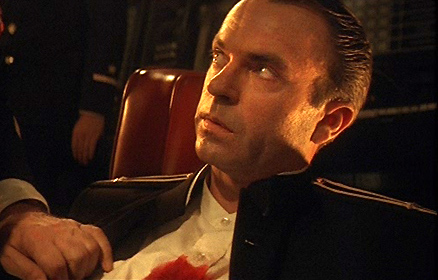
There is nothing intrinsically wrong with a bill proposed by Rep. Dennis Himmelberger, R-Billings requiring Montana drivers to understand English so they can read road signs and communicate with law enforcement officers.
Montana Headlines questions, however, whether bills like this cause us to lose focus on the primary task at hand. As we have noted before, we agree with former Montana Secretary of State Bob Brown on this point: Montana is blessed with having had time to learn from the experiences of other states that have long dealt with the effects of illegal immigration. If we fail to use this grace period wisely, it will be a failing of our current legislature that may have longer-reaching impacts than will any other of the failings they devise.
Montana should have a comprehensive package of bills that focus on key issues: requiring citizenship or legal resident status to receive welfare benefits or hold a driver's license, instituting procedures to ensure that only citizens of Montana vote in our elections, establishing laws that require law enforcement officers and other state employees to notify the INS of any illegal immigrants they encounter, and instituting stiff penalties for employers who hire illegal immigrants.
English can and should be the official language of Montana, the only language in which state business and public education is done. The concerns that Rep. Himmelberger has about drivers who can't understand English are more than warranted. But if a comprehensive plan as noted above is instituted, that will take care of itself.
Subscribe to:
Posts (Atom)