It's Friday, and time for a book review.
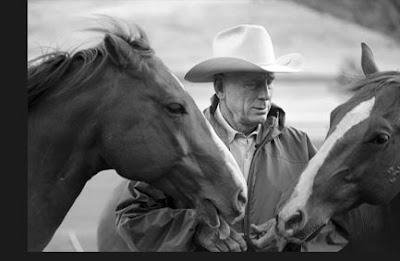
I am overdue on paying tribute to some of the great writers who live in this region, and given some of my Monday preoccupations, it is perhaps appropriate that I choose first a writer who was born and raised in North Dakota, and who returned to live in the western high plains of that state after having made his name in the New York literary world. I speak, of course, of Larry Woiwode.
I first came across Woiwode's name in a dusty pile of magazines in a little room where I was doing some tedious research work to make spare cash while a starving student. Always looking for something to read, during a break I picked up a cultural magazine I hadn't heard of before and read an article in which Woiwode was briefly mentioned. Something about the reference intrigued me, and I ordered up a couple of his books on interlibrary loan at the local public library (does anybody even do that anymore? I ordered them by the pile back then, since I couldn't afford even to buy many used books and since the stores available to me so often didn’t have the books I was looking for.)
In any event, I took one look at the thickness of his masterpiece, Beyond the Bedroom Wall, and decided that I needed to save it for a bit later. I saw in a biographical note that he had settled on a small farm/ranch near Mott, ND and thought this a bit odd, even though the southwestern corner is that state’s most habitable part. Didn’t big writers settle in places like Aspen or Livingston if they chose to come west? I figured it was one of those whimsical things that some artistes tend to do and that it wouldn’t last. The joke was on me – by the time I read that bit about Woiwode, he had already been back in North Dakota for nearly a decade, and he has now been living and writing there for 35 years.
The first thing of his that I read was his brilliant first novel What I’m Going to Do, I Think, which I read in a single sitting. His defining work, however, is still his second novel, Beyond the Bedroom Wall, for which the often overused phrases of “achingly beautiful” and “heart-rending” really do apply... and then some. I actually had to stop reading when I saw its painful denouement looming on the horizon and was only able to return to finish the book years later.
 While fiction remains at the center of Woiwode’s identity as a writer, he has in recent years turned to a series of memoirs that have been every bit as captivating as his novels. He started with Acts, which, while ostensibly a reflection on the Biblical book of the same name, was interwoven with personal reflections – spiritual and literary – that seemed to be an initial exploration of the genre. Then, there was the wonderful What I Think I Did: A Season of Survival in Two Acts, in which Woiwode recounts life on his farm during the historically harsh 1997 winter, using it as the structure around which he delves deeper into personal musings on his life and writing.
His most recent memoir, A Step From Death, had been sitting on my shelves for a few years, marinating, as do so many books, until just the right time to read it arrived, which it recently did. This memoir uses as its taking-off point Woiwode’s encounter with the power take-off (PTO) of a baler he was running (guess which one came out more unscathed) and is written in the voice of Woiwode talking to his son.
Woiwode’s writings are haunted by memories and dreams, sometimes jumbled together in a seeming disorder that masks the granite structure that holds them together, and A Step From Death is no exception. As with his earlier memoirs, Woiwode writes as if caught in a great spiral, coming round again and again to the same people and themes, but each time touching down a little closer to the center of what it is he wants us to understand. He writes, for instance, of his relationship with his long-time editor at the New Yorker, William Maxwell, who was friend and mentor to a young Woiwode making his way in New York. We learn much about Maxwell in What I Think I Did and even more in this memoir, now discovering that part of Maxwell’s instinctive affinity for Woiwode was the fact that both had lost their mothers at the same young age. Being haunted by similar ghosts and having had to navigate without the North Star that is one’s mother, Maxwell was perhaps uniquely able to guide Woiwode as he found his voice and his story.
Woiwode’s long string of New Yorker stories and his two most important novels -- Beyond the Bedroom Wall and Born Brothers -- tell the story of multiple generations of the fictional Neumiller family, which is rooted in Woiwode’s own memories. A Step From Death now introduces us more closely to some of the people who inspired his fiction. Particularly moving to me was his recounting of a visit to the remote Minnesota farm where his maternal grandparents lived:
Water for drinking and cooking and bathing and poultry and livestock – a dozen cows and a team of horses Grandpa uses to cultivate the acreage he breaks after clearing the jack pine – every glass or bucket of water is pumped by hand at a hand pump from a hand-dug well. The primitive nature of the place enhances my affection for it, in my quest to resurrect the primal scene, although it isn’t until I’m out of college that I realize I grew up in an earlier century and carry a heritage nobody younger can know, no American will, not anymore, and here I first sense words embedded as deep as muscles go, along with their roots in an earlier language, an intuition of this trembling in me as my grandmother reaches out and puts her hand over my head.
How does she know to do this?
The history of a family begins with a woman, to condense Cather, and the pressure of her hand produces generations behind her, as if I’m a boy they recognize from a dream, mingling with us in a room smelling of lefse, that Norwegian potato tortilla she rolls thin as a thumbnail, the scent of fresh bread a bass note, and then in a crush of air she hurries to the piano and she and my mother sing hymns in the house whose only locus is the Minnesota woods.
Woiwode’s observations are particularly poignant for me, since I have also come to the realization that the world in which I grew up – the one-room country school, the preternatural silence that only remoteness can give, the smell of tilled soil and ripened hay, the sound of the wind and the feel of a stirrup against one’s boot, the gatherings where the old songs were still sung – while once a common American experience, this is now one that few people one encounters know anything about, and the ones who do know tend to be decades closer to death than oneself, yielding the prospect of a dotage in which many of one’s memories will be unshared.
About that silence, though. How about another passage from the book?
Late one night (after first moving back to North Dakota), realizing I could follow every car and truck on the highway five miles off, my hearing reached so far I felt a backwash as my ears twitched and throbbed to open wide. I couldn’t sleep for the silence. Out the bedroom window our tree rows looked frozen under a fall moon. Farther off, two miles if I could fly true as a crow, the pole light of a neighbor glowed, and in the wind rocked and sparkled like a distant star. A dove sounded its mourning notes, ah ooo --- hoo-hoo-hoooo, and then a pack of coyotes started up their operatic prelude, yodeling from a distant hill, their chorus answered by barks and yips from far fields, and with the natural world carrying on its concourse I slipped into sleep as if listening to Mozart.
Woven through the book are literary reminiscences that will delight anyone who loves writing (whether reading it or indulging the vice personally.) We catch glimpses of Woiwode agonizing during his long nights (when at his most productive, he tended to work through the night, going to sleep when the rest of the household was rising) over getting his prose just right, and having read his novels, we believe it. And there are insights into what he aims for:
My work attunes me to the versatility of words. I like language that’s allusive but solid enough to allow comic somersaults within its gravity, while meaning radiates from its premises to wider realms.
For a Montana reader, of interest is a young Jim Harrison, accompanied by an equally young and larger than life Tom McGuane, appearing at the doorstep of a cabin in the Michigan woods where an even younger Woiwode was living with his wife and daughter, trying desperately to keep writing through the emotional overwash that came after the publication of his first novel. In McGuane’s “My galleys came a while back. Isn’t it great to be a real writer!” one already gets a glimpse of a man enthusiastic about a certain kind of literary life, one who would later have to deal with accusations (perhaps from the jealous) that he was better at being a Hemingway-like literary celebrity than at writing.
Ultimately, however, A Step From Death revolves around the things most important to Woiwode – his faith and his family – their priority proven by repeated decisions to choose both over his writing career when those forks in the road appeared before him. Not content with recounting just the one brush with death-dealing farm equipment, he weaves into the memoir a family’s lifetime of experiences with nearly losing life and limb (we all have more than we like to remember – and the more rural one’s existence, the more we have.) Each reveals a little more about the preciousness of this short time that we do have with the ones we love, and each brings us, if we are willing, to contemplate the death that we will all eventually face one final time.
And this, Woiwode explains, is a part of why we are so often drawn to memories – both our own and those of others. Writing in the book to his son, he says:
...every forward inclination, even a life-enhancing one, is another step toward death. And if you feel I keep stepping further from the present, yes, I do. The past is my secure sector of existence – everything I’ve been through, no matter how trying it may have been, is over. It’s death that lies ahead…
Morbid? Actually not. Using another overworked phrase, it would be hard to imagine more “life-affirming” writing than Woiwode’s, including this book. For those who have journeyed with Woiwode over the years, A Step From Death allows us to walk with him for a time as with an old friend. And for those who haven’t, it is an accessible book that displays the range of his talents as a writer and that will likely leave those readers wanting more.